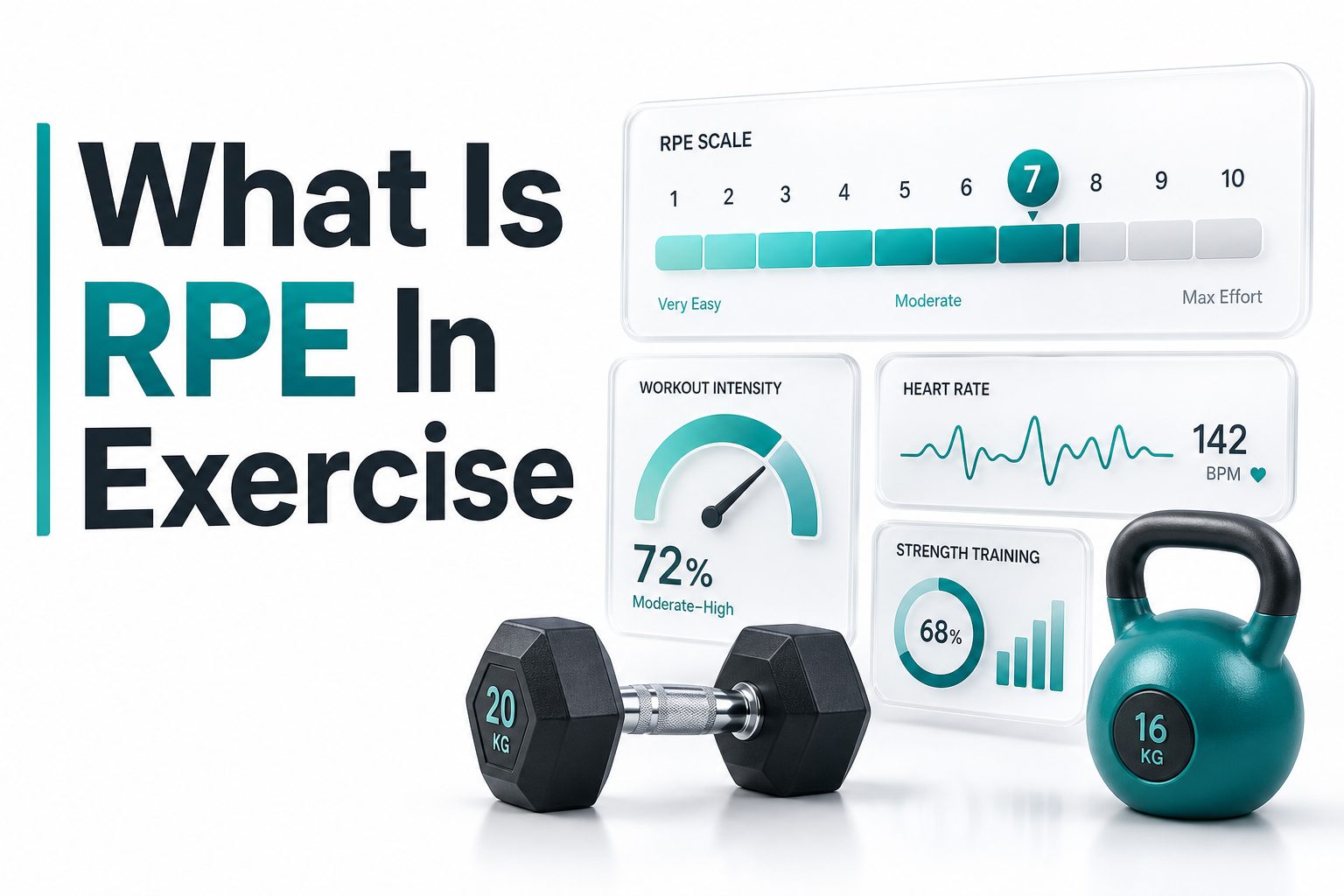
RPE stands for rate of perceived exertion, a simple way to measure how hard an exercise feels while you are doing it. Instead of relying only on heart rate, speed, or weight, RPE uses your own effort level as feedback.
The idea is practical because your body does not perform the same every day. Sleep, stress, food, hydration, soreness, and mood can all affect performance. RPE helps you adjust training based on how your body feels in real time.
For lifters, runners, cyclists, and general fitness clients, RPE creates a clear language for intensity. It helps you train hard enough to improve while avoiding unnecessary fatigue that can slow progress or increase injury risk.
Why RPE Matters in Training
RPE matters because exercise intensity should match your current ability, not just a number written in a plan. A workout that felt easy last week may feel much harder today if recovery, stress, or energy levels are different.
Using RPE gives you flexibility without removing structure. You can still follow a program, but you have a better way to choose the right load, pace, or effort for that specific session. This makes training more realistic.
RPE is also useful for long-term progress. When you track effort along with sets, reps, weight, distance, or time, you get a better view of performance. You can see whether you are getting stronger, fitter, or more efficient.
Key benefits of using RPE
- Helps match workout intensity to daily readiness
- Supports safer progress in strength and cardio training
- Reduces the chance of training too hard too often
- Makes workouts easier to adjust without guessing
- Improves communication between coaches and clients
- Works with bodyweight, weights, machines, running, cycling, and circuits
The RPE Scale
Most modern exercise programs use a 1 to 10 RPE scale. A rating of 1 means very light effort, while 10 means maximal effort with no more capacity left. This simple range makes intensity easy to describe.
In strength training, RPE often connects to reps left in reserve. For example, an RPE 8 set usually means you could complete about two more good reps before failure. RPE 9 means one rep remains, and RPE 10 means none.
In cardio training, RPE often relates to breathing, pace, and comfort. A low RPE allows easy conversation, while a high RPE makes speaking difficult. This makes the scale useful even when heart rate data is unavailable.
RPE 1 to 3
RPE 1 to 3 feels very easy. This effort range is common during warm-ups, cool-downs, mobility work, recovery walks, and light cycling. You should be able to breathe comfortably and hold a normal conversation.
This range is not useless just because it feels easy. Low-intensity movement improves blood flow, helps recovery, and prepares joints and muscles for harder work. It also supports consistency for beginners and people returning after time away.
For strength work, RPE 1 to 3 usually means the load is far below your challenging range. It may be useful for technique practice, rehab exercises, or early warm-up sets before heavier working sets begin.
RPE 4 to 6
RPE 4 to 6 feels moderate. You are working, but you remain in control. Breathing becomes deeper during cardio, and strength sets require attention, but you still have several reps or minutes left in reserve.
This range is valuable for base fitness, skill practice, volume work, and lower-stress training days. It allows you to build capacity without pushing close to failure. Many sustainable training plans use this range often.
For people new to exercise, RPE 4 to 6 may be enough to create progress. As fitness improves, this range still has a place because not every session should feel intense or mentally demanding.
RPE 7 to 8
RPE 7 to 8 feels challenging but manageable. You need focus, breathing is more demanding, and muscles are working hard. In strength training, you usually have about two or three good reps left before failure.
This range is commonly used for productive working sets because it balances effort and recovery. You can create a strong training stimulus without reaching the highest fatigue levels. That makes it useful for building muscle and strength.
For cardio, RPE 7 to 8 may feel like a controlled hard pace. You can continue for a limited time, but conversation becomes short. This level is common in tempo runs, intervals, and conditioning workouts.
RPE 9 to 10
RPE 9 to 10 feels very hard. At RPE 9, you are close to your limit but may have one strong rep or short effort left. At RPE 10, you are at maximum effort.
This range can be useful, but it should be used carefully. Maximal effort creates high fatigue and may require more recovery. Training at RPE 9 or 10 too often can affect technique, motivation, and consistency.
Advanced athletes may use this range during testing, peak phases, or specific performance sessions. Most recreational lifters and fitness clients benefit from using it sparingly while spending more training time in moderate to hard ranges.
How RPE Works for Strength Training
In strength training, RPE helps you select loads based on effort rather than fixed percentages alone. A program may suggest three sets of five at RPE 8, meaning each set should feel hard but not maximal.
This is useful because your strength changes from day to day. A weight that normally feels manageable may feel heavy after poor sleep. RPE lets you reduce the load slightly while still completing quality work.
RPE also protects technique. When a set moves from challenging to sloppy, the rating is likely too high. Good strength training depends on effort, but it also depends on controlled reps, stable positions, and repeatable form.
For more detail on building strength safely, read our strength training guide: /strength-training-guide
How RPE Works for Cardio
For cardio, RPE helps guide pace without needing advanced devices. You can rate effort during running, rowing, cycling, swimming, stair climbing, or group fitness. The scale works because breathing and fatigue change clearly as intensity rises.
An easy cardio session might sit around RPE 3 or 4. A steady workout may land around RPE 5 or 6. Hard intervals may reach RPE 8 or 9 depending on duration and recovery time.
RPE is especially useful when weather, terrain, heat, hills, or fatigue affect performance. Pace and heart rate may shift, but perceived effort helps you stay within the goal of the session.
Sample RPE Cardio Guide
- Easy recovery session: RPE 2 to 3
- Steady aerobic session: RPE 4 to 5
- Moderate endurance session: RPE 6
- Tempo session: RPE 7
- Hard interval session: RPE 8 to 9
- Max effort sprint: RPE 10
RPE and Reps in Reserve
Reps in reserve, often called RIR, is closely linked with RPE in strength training. RIR estimates how many more good reps you could complete before reaching failure. This makes RPE easier to apply during lifting.
A set at RPE 7 usually leaves around three reps in reserve. RPE 8 leaves about two reps. RPE 9 leaves about one rep. RPE 10 means no more quality reps are left.
This system works best when you practice honest self-assessment. Many lifters underestimate or overestimate their effort at first. Over time, tracking sets and comparing performance helps you rate effort more accurately.
Common RPE Mistakes
One common mistake is treating every workout like it must reach RPE 9 or 10. Hard training has value, but constant near-max effort can create too much fatigue. Progress often comes from repeated quality work.
Another mistake is rating effort based only on discomfort. Burning muscles, heavy breathing, or mental resistance do not always mean you are near your physical limit. RPE should reflect total effort and remaining capacity.
A third mistake is changing the target during the workout without a reason. If a plan calls for RPE 7, turning every set into RPE 9 changes the training effect. Discipline includes holding back when needed.
How Beginners Can Use RPE
Beginners can use RPE to build body awareness. At first, it may be hard to tell the difference between moderate and hard effort. That is normal. The skill improves with consistent training and simple tracking.
A good starting point is to keep most workouts between RPE 4 and 7. This range allows progress while leaving enough energy for learning technique, building confidence, and recovering between sessions.
Beginners should avoid frequent RPE 10 efforts. Maximal training is not required to improve early on. Consistent sessions, good form, and gradual increases in workload usually matter more than pushing to the limit.
How Coaches Use RPE
Coaches use RPE to personalize training without rewriting every detail. Two clients may complete the same exercise, but the right load may differ based on strength, recovery, experience, and movement quality.
RPE also improves communication. Instead of saying a set felt heavy, a client can report that it felt like RPE 8. This gives the coach clearer feedback and helps guide future programming decisions.
For online coaching, RPE becomes even more valuable. A coach may not see every session live, so effort ratings, workout notes, and videos can help shape better training adjustments over time.
RPE Versus Heart Rate
RPE and heart rate both measure exercise intensity, but they do it differently. Heart rate gives a numerical response from the body, while RPE gives a personal rating of effort. Both can be useful.
Heart rate can be affected by caffeine, heat, stress, dehydration, medication, and poor sleep. Because of this, the number may not always match how the workout feels. RPE adds helpful context to the data.
For cardio athletes, combining RPE and heart rate often works well. Heart rate gives structure, while RPE helps explain the experience. Together, they create a more complete view of training intensity.
For more practical pacing tips, read our cardio training
RPE Versus Percentage Training
Percentage training uses a fixed portion of your one-rep max, such as 70 percent or 85 percent. This can be effective, especially for experienced lifters who know their tested max and follow a structured plan.
The limitation is that a true max can change based on fatigue, readiness, and training phase. A percentage that should feel moderate may feel very hard on a low-energy day. RPE allows adjustment.
Many lifters use both systems together. A program may suggest a percentage range and an RPE target. This keeps training structured while still allowing small changes based on actual performance that day.
Best Exercises for RPE Tracking
RPE can be used with nearly any exercise, but it works especially well for repeated movements. Squats, deadlifts, presses, rows, lunges, pull-ups, running, cycling, and rowing are easy to rate over time.
For complex lifts, RPE should include technique quality. A heavy squat may feel possible, but if depth, balance, or bracing breaks down, the set may be too intense for productive training.
For isolation exercises, RPE is often easier to judge because the movement is simpler. Biceps curls, leg extensions, hamstring curls, and lateral raises can be taken closer to failure with lower overall risk.
How to Track RPE
Tracking RPE does not need to be complicated. Write down the exercise, sets, reps, load, distance, time, and effort rating. Over several weeks, these notes show whether training is becoming easier or more demanding.
For strength training, record the RPE of your working sets. If the same weight and reps feel easier later, that often shows progress. If normal weights suddenly feel much harder, recovery may need attention.
For cardio, record pace, duration, route, and RPE. A run at the same pace but lower RPE can show improved fitness. A higher RPE at an easy pace may signal fatigue, heat stress, or poor recovery.
Sample RPE Workout Notes
- Back squat: 3 sets of 5 reps at 185 pounds, RPE 7
- Bench press: 4 sets of 6 reps at 135 pounds, RPE 8
- Romanian deadlift: 3 sets of 8 reps at 155 pounds, RPE 7
- Easy run: 30 minutes, RPE 4
- Bike intervals: 6 rounds of 2 minutes hard, RPE 8
- Recovery walk: 25 minutes, RPE 2
How RPE Supports Recovery
RPE helps recovery because it shows when training stress is rising. If normal workouts feel harder for several sessions, your body may need lighter training, better sleep, more food, or reduced volume.
Recovery is not only about rest days. It also includes lower-intensity workouts, easier sets, mobility work, and active recovery. RPE helps you choose the right level of effort when your body needs less strain.
This does not mean avoiding hard work. It means placing hard work where it fits best. Smart training balances stress and recovery so performance can improve without constant exhaustion.
RPE for Muscle Growth
For muscle growth, RPE helps you train close enough to failure to stimulate the target muscles. Many hypertrophy sets work well around RPE 7 to 9, depending on the exercise and training phase.
You do not need every set to reach failure to build muscle. Stopping with one to three reps in reserve often creates enough stimulus while reducing joint stress, form breakdown, and recovery cost.
Some exercises are better suited for higher RPE than others. Machine presses, curls, extensions, and cable movements can often be pushed harder than heavy squats or deadlifts because they are easier to control.
RPE for Fat Loss Training
RPE can support fat loss by keeping workouts sustainable. Many people make the mistake of pushing every session too hard, then losing consistency. A mix of moderate strength training and manageable cardio often works better.
During a calorie deficit, recovery may be reduced. Weights can feel heavier, and cardio can feel harder. RPE helps you adjust training so you keep moving without forcing performance that your current energy cannot support.
Fat loss depends heavily on nutrition and consistency, but training still matters. RPE helps maintain useful effort while reducing burnout. This makes it easier to stay active across weeks and months.
RPE for Older Adults
Older adults can use RPE to train safely and confidently. The scale helps match exercise intensity to ability, medical history, and daily energy. It can be used for walking, resistance machines, bands, or bodyweight movements.
Many older adults benefit from moderate effort training around RPE 4 to 7. This can improve strength, balance, mobility, and endurance without requiring maximal effort. Progress should be steady and well controlled.
Anyone with medical conditions, pain, or a long break from exercise should seek guidance from a qualified professional. RPE is helpful, but it does not replace medical advice or proper exercise supervision when needed.
Practical Tips for Better RPE Accuracy
Rate effort after the set or interval, not before. Guessing ahead of time can be inaccurate. The best rating comes from how the work actually felt and how many more quality reps or minutes you had left.
Use consistent standards. For lifting, think about reps in reserve. For cardio, think about breathing, pace control, and how long you could continue. This makes your ratings more reliable over time.
Review your notes every few weeks. If your RPE ratings improve at the same workload, you are likely adapting. If effort keeps rising without planned intensity increases, recovery or programming may need changes.
Conclusion
RPE is a practical tool for managing exercise intensity across strength training, cardio, fat loss, muscle growth, and recovery. It helps you match effort to your current readiness while keeping training structured, flexible, and easier to track over time.
The 1 to 10 scale makes effort easier to describe. Lower numbers fit warm-ups and recovery, middle numbers support steady progress, and higher numbers belong to challenging or near-maximal work when recovery allows it.
If you have ever asked what is rpe in exercise, the simplest answer is this: it is a personal effort rating that helps you train with better control, better feedback, and a stronger sense of when to push or adjust.
FAQs
What does RPE mean in fitness
RPE means rate of perceived exertion. It is a scale used to rate how hard an exercise feels during a workout. Many programs use a 1 to 10 scale to guide effort, pacing, and load selection.
Is RPE better than heart rate
RPE is not always better than heart rate, but it adds useful context. Heart rate gives a number, while RPE reflects how the workout feels. Using both can give a clearer view of training intensity.
What RPE is best for muscle growth
Many muscle-building sets work well around RPE 7 to 9. This means the set is challenging and close to failure, but usually leaves one to three good reps available. Exercise choice and recovery matter too.
Should beginners use RPE
Beginners can use RPE, but they may need practice to rate effort accurately. Most beginner workouts should stay around RPE 4 to 7 while technique, confidence, and consistency improve over time.
Can RPE help prevent overtraining
RPE can help spot rising fatigue before it becomes a bigger issue. If normal workouts feel much harder for several sessions, that may signal poor recovery, stress, low energy, or a need for lighter training.
0 Comments