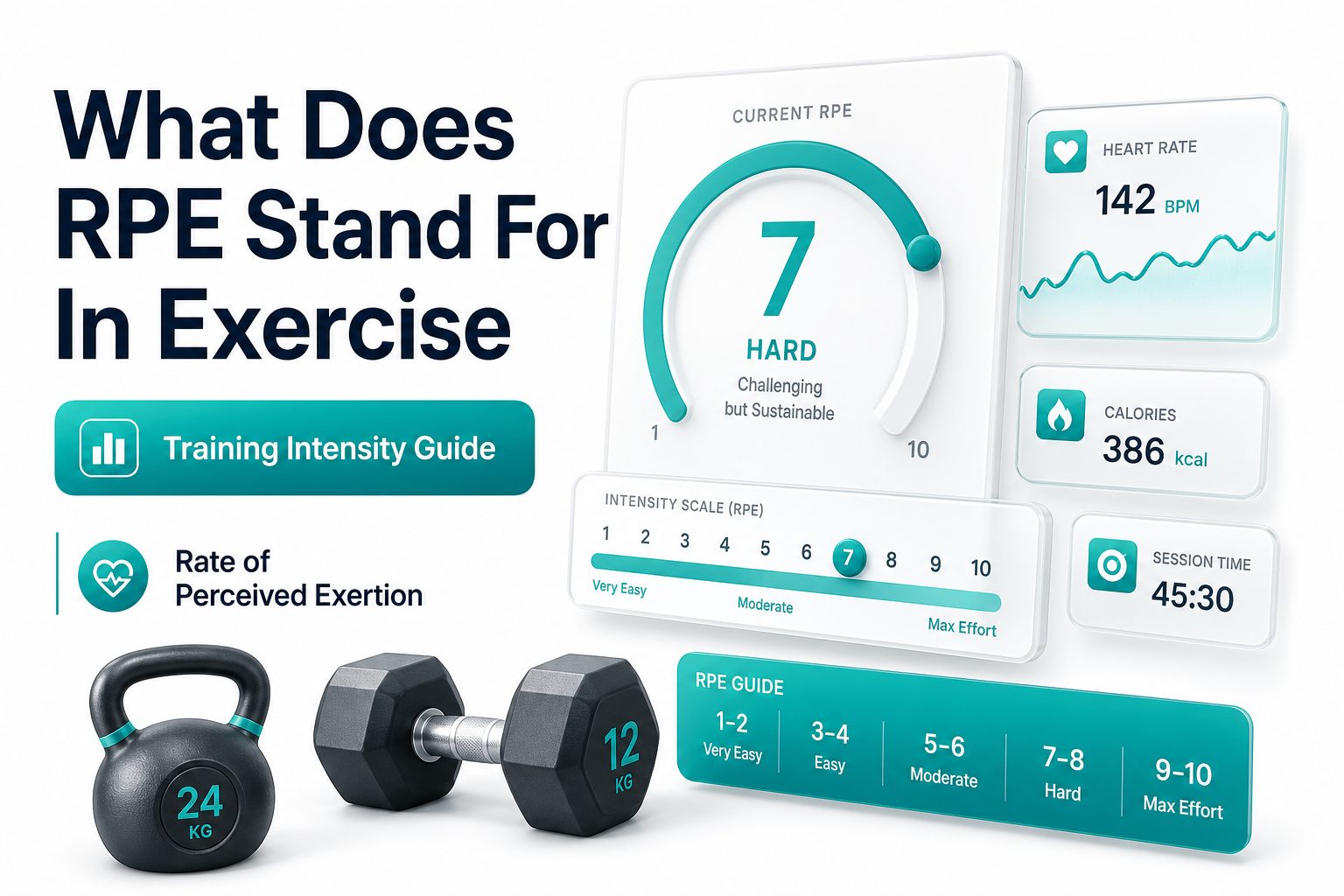
RPE stands for Rate of Perceived Exertion. In exercise, it describes how hard a workout, set, run, ride, or training session feels based on your breathing, muscle fatigue, focus, and overall effort.
The idea is simple: your body gives feedback during training. RPE turns that feedback into a number, helping you judge intensity without relying only on heart rate monitors, watches, or weight on the bar.
For lifters, runners, cyclists, and general fitness clients, RPE creates a practical way to train with more awareness. It helps match the day’s workout to your current energy, recovery, and performance level.
Why RPE Matters in Modern Training
RPE matters because performance changes from day to day. Sleep, stress, hydration, nutrition, soreness, and work demands can all affect how heavy a weight feels or how difficult a steady pace becomes.
A fixed training plan may say to lift a certain weight or run at a certain pace. RPE adds context by showing whether that effort is manageable, too easy, or more demanding than expected.
This makes RPE valuable for long-term progress. It helps athletes and everyday exercisers avoid pushing too hard on poor recovery days while still training with purpose when they feel strong.
Key RPE Benefits
- Helps match workout intensity to daily readiness
- Supports safer strength training and cardio progression
- Makes training more personal without needing expensive devices
- Helps prevent overtraining and unnecessary fatigue
- Works for beginners, advanced athletes, and coaching settings
- Improves communication between trainers and clients
- Supports better pacing during endurance sessions
- Helps manage effort during injury return or deload periods
How the RPE Scale Works
The most common exercise RPE scale runs from 1 to 10. A rating of 1 means very light effort, while 10 means maximum effort with no ability to continue at the same intensity.
For general training, an RPE of 4 to 6 often feels moderate. You are working, but you can continue comfortably. An RPE of 7 to 8 feels challenging and requires focus.
An RPE of 9 means near maximum effort, with very little left in reserve. RPE 10 means full effort, where another rep, interval, or minute at the same intensity is not realistic.
RPE in Strength Training
In strength training, RPE often connects to reps in reserve. If a set feels like you could complete two more good reps, that set is usually around RPE 8.
This approach helps lifters adjust load based on the day. A weight that usually feels easy may feel harder after poor sleep, while the same weight may feel smoother after better recovery.
Many coaches use RPE because it balances structure with flexibility. For more support, a strength training for beginners guide can help new lifters combine proper technique with effort-based progression.
RPE and Reps in Reserve
Reps in reserve, often called RIR, means the number of extra reps you believe you could complete before reaching technical failure. It pairs well with RPE in resistance training.
For example, RPE 7 usually means about three reps in reserve. RPE 8 means about two reps left, while RPE 9 means one more rep may be possible.
This system helps keep training productive without making every set a maximum-effort test. It also protects technique, since most productive strength work happens before form breaks down badly.
RPE Strength Training Guide
RPE 6: Light to moderate set with about four reps left in reserve.
RPE 7: Challenging set with about three reps left in reserve.
RPE 8: Hard working set with about two reps left in reserve.
RPE 9: Very hard set with about one rep left in reserve.
RPE 10: Maximum effort set with no reps left in reserve.
RPE in Cardio Workouts
RPE is useful for cardio because pace and heart rate do not always tell the full story. Heat, hills, fatigue, caffeine, and stress can all change how hard a session feels.
During easy cardio, your RPE may sit around 3 or 4. You can breathe steadily, hold a conversation, and finish the session feeling refreshed rather than drained.
During tempo work or intervals, RPE may climb to 7, 8, or 9. At that point, talking becomes difficult, breathing is heavier, and your focus turns toward maintaining effort.
Using RPE for Fat Loss and Fitness Goals
For fat loss, RPE helps manage consistency. Many people quit training because every workout feels punishing. Using moderate effort ratings can keep sessions effective without making exercise feel impossible to repeat.
A balanced plan may include strength sessions around RPE 7 or 8, plus cardio around RPE 4 to 6. This gives enough challenge while protecting recovery and motivation.
For general fitness, RPE also supports variety. Some days can be easier, some days can be harder, and the overall week can still move toward better strength, endurance, and body composition.
RPE for Different Training Goals
Muscle gain: Most working sets often sit around RPE 7 to 9, depending on exercise selection and training phase.
Strength: Heavy sets often use RPE 7 to 9, with occasional higher-effort testing.
Endurance: Easy base work may stay around RPE 3 to 5, while intervals may reach RPE 8 or 9.
Recovery: Light movement usually stays around RPE 2 to 4.
General health: Most sessions can stay between RPE 4 and 7.
How Beginners Can Use RPE
Beginners should start by learning how different effort levels feel. This takes practice because many new exercisers either underestimate effort or push too close to failure too often.
A useful starting point is staying around RPE 5 to 7 for most workouts. This range builds skill, confidence, and consistency while leaving room to improve without excessive soreness.
As technique improves, beginners can use higher RPE levels on safer exercises. Machines, dumbbell movements, and controlled cardio intervals are often easier places to practice effort ratings.
Common RPE Mistakes
One common mistake is treating every session like RPE 10. Maximum effort has a place, but using it too often can increase fatigue, reduce performance, and make training harder to sustain.
Another mistake is rating effort only after the workout ends. RPE works best when checked during sets, intervals, and sessions so adjustments can happen before fatigue becomes excessive.
Some people also confuse discomfort with productive effort. Burning muscles, heavy breathing, or sweating can feel intense, but good RPE judgment also considers control, technique, and the ability to continue.
RPE and Heart Rate Training
Heart rate training measures internal response, while RPE measures perceived effort. Both can be useful, but they do not always match perfectly during real workouts.
For example, your heart rate may be higher than usual during hot weather or after caffeine. RPE helps you decide whether the session still feels controlled or needs adjustment.
A heart rate zone training guide can pair well with RPE. Together, these tools provide a clearer picture of intensity, especially for runners, cyclists, and hybrid athletes.
RPE and Recovery Management
Recovery is one of the strongest reasons to use RPE. When the same workout feels much harder than normal, your body may be signaling accumulated fatigue or poor readiness.
This does not always mean you should skip training. It may mean lowering weight, reducing volume, slowing pace, or choosing a lower-intensity session for the day.
Over time, tracking RPE can reveal patterns. If moderate workouts keep feeling like maximum effort, it may be time to review sleep, nutrition, stress, training volume, or rest days.
How Coaches Use RPE
Coaches use RPE to guide training without needing to watch every rep or every mile in person. It gives clients a simple language for reporting effort.
Instead of saying a workout was hard, a client can say it felt like RPE 8. That gives the coach more useful feedback for adjusting load, pace, volume, and recovery.
RPE also helps coaches individualize group programs. Two athletes may follow the same workout, but their loads or speeds can differ based on how the assigned effort should feel.
RPE for Home Workouts
Home workouts often use limited equipment, which makes RPE especially helpful. Without a full gym setup, effort ratings help make bodyweight, bands, dumbbells, or kettlebells more effective.
For example, a set of push-ups can be stopped at RPE 8 instead of always going to failure. This protects form while still creating enough challenge for progress.
RPE also helps with home cardio. Step-ups, jump rope, cycling, brisk walking, and bodyweight circuits can all be adjusted by effort instead of relying only on speed or duration.
RPE for Injury Return
Returning from injury requires careful effort control. RPE can help keep training below painful or risky levels while rebuilding confidence, strength, and movement tolerance gradually.
In this phase, lower ratings such as RPE 3 to 6 are often more appropriate. The goal is not to prove toughness but to restore capacity without sharp pain or setbacks.
Medical guidance still matters for injury recovery. RPE is a useful training tool, but it should not replace advice from a qualified clinician when pain, swelling, or serious limitations are present.
How to Track RPE
Tracking RPE can be simple. Write down the exercise, weight, reps, distance, time, and effort rating after each set or workout. Over time, this creates useful training history.
For strength training, you may record RPE beside each working set. For cardio, you may record average session RPE or effort ratings for specific intervals.
The key is consistency. RPE does not need to be perfect to be useful. A steady habit of rating effort gives better feedback than occasional detailed notes.
Sample RPE Workout Plan
Day 1 strength: Squats, presses, rows, and core work at RPE 6 to 8.
Day 2 cardio: Easy steady session at RPE 4 to 5.
Day 3 strength: Deadlift variation, lunges, upper-body pulls, and carries at RPE 6 to 8.
Day 4 recovery: Mobility, walking, or light cycling at RPE 2 to 4.
Day 5 intervals: Short hard efforts at RPE 8 to 9 with full recovery between rounds.
Practical Tips for Better RPE Accuracy
Pay attention to breathing, speed, form, and mental focus. These clues help you rate effort more accurately than relying on discomfort alone.
Compare similar workouts over time. If the same weight, pace, or circuit feels easier after several weeks, your fitness or strength may be improving.
Avoid judging every workout emotionally. A session can feel mentally tiring while still being physically manageable. Good RPE ratings come from observing performance and effort together.
Conclusion
RPE is a simple but powerful way to measure training intensity using your own body’s feedback. It helps lifters, runners, beginners, and experienced athletes adjust workouts based on effort, recovery, and performance.
When used consistently, RPE supports smarter progress, better pacing, and fewer unnecessary training setbacks. It works with strength training, cardio, home workouts, fat loss plans, and recovery-focused exercise.
The phrase what does rpe stand for in exercise refers to Rate of Perceived Exertion, a practical scale that helps you train with more control, awareness, and long-term consistency.
FAQ
What does RPE mean in fitness?
RPE means Rate of Perceived Exertion. It is a scale used to rate how hard exercise feels based on breathing, muscle fatigue, effort, and your ability to continue safely.
Is RPE better than heart rate?
RPE is not always better, but it adds useful context. Heart rate shows physical response, while RPE shows how the workout feels. Using both can improve pacing and intensity control.
What RPE should beginners use?
Beginners often do well around RPE 5 to 7. This range provides enough challenge for progress while leaving room to learn technique, build confidence, and avoid excessive soreness.
Does RPE help build muscle?
Yes, RPE can help build muscle by guiding sets close enough to fatigue without forcing maximum effort every time. Many muscle-building sets fall around RPE 7 to 9.
Can RPE be used for running?
RPE works well for running because pace can change with weather, hills, stress, and recovery. It helps runners adjust effort during easy runs, tempo sessions, intervals, and long runs.
0 Comments